Best High Potency Electrolyte Powder: Sodium Decides
Sodium tolerance splits this category cleanly. Here's which high potency electrolyte powder fits which older adult, with the milligrams laid out side by side.
The best high potency electrolyte powder for seniors is INSALTD Sugar-Free Electrolyte Powder Packets, because it publishes 900mg sodium, 300mg potassium and 100mg magnesium per 0.23 oz packet, which is the fullest mineral stack in this set. If your doctor has capped your daily sodium, Dr. Berg Zero Sugar Hydration is the better call: 1000mg potassium with only 40mg sodium from pink Himalayan salt per scoop.
How I screened these six down from a wider set
The listings do not name a "senior" formula, so the modifier here is one I applied at the buyer's end, not one Amazon confirmed. Older adults shop this category for different reasons than athletes, and those reasons decide the picks.
Three cuts shaped the shortlist:
- Any powder that failed to publish a milligram figure for at least two minerals was cut. A high potency claim without numbers is a claim you cannot verify against a doctor's brief. Every pick here states its sodium or its potassium in milligrams on the listing.
- Anything sweetened with sucralose without a clear disclosure was cut. The six that remain either use stevia, glycine, or no artificial sweetener at all, and every one is labelled sugar-free.
- Anything without a stated serving count was cut. Older shoppers plan supplies by month, not by workout. A tub with 76, 100 or 139 servings is easier to budget than a bag that lists only its weight.
What survived splits into two shapes. Three are single-serve packets: INSALTD at 28 count, Venture Pal at 16 count, and nothing else in packet form here. Three are tubs: two NatureBell 1.1 lb pouches, Micro Ingredients at 2 lb, and Dr. Berg at 1.46 lb. Packet shoppers pay more per serving and gain portability. Tub shoppers get more servings per container and one flavour to live with.
Best high potency electrolyte powder for seniors at a glance
| Pick | Sodium | Potassium | Servings | Price |
|---|---|---|---|---|
| Best overall INSALTD Sugar-Free Electrolyte Powder Packets |
900mg claim | 300mg claim | 28 packets | Check Price |
| Best premium Dr. Berg Zero Sugar Hydration Keto |
40mg claim | 1000mg claim | 100 servings | Check Price |
| Best upgrade Micro Ingredients Electrolytes Powder |
Low-sodium claim | 1000mg claim | 139 servings | Check Price |
| Most versatile NatureBell Electrolytes Powder No Sugar |
Low-sodium claim | 1000mg claim | 76 servings | Check Price |
| Best minimal setup NatureBell Electrolytes Powder |
Not listed | High-potassium claim | Not listed | Check Price |
| Best budget pick Venture Pal High Sodium Electrolytes Powder |
High-sodium claim | Not listed | 16 packets | Check Price |
Sodium or potassium: which number decides it?
Most guides to the best high potency electrolyte powder for seniors compare total mineral count. That is not what decides it. Sodium tolerance is.
Older adults sit on both sides of the sodium line. Some run low on salt because of diuretics, low appetite, or a doctor's guidance to eat lightly. Others are under strict caps for blood pressure. The same 900mg packet is a rescue for the first person and a problem for the second. No powder in this set fits both.
The threshold is your prescribed daily sodium ceiling. Under 1,500mg per day, treat the packets in this guide with caution and lean on the high-potassium, low-sodium tubs. Between 1,500mg and 2,300mg, most picks here fit if you count the packet into your day's total. Above that, or if your doctor has told you to add salt for cramps or lightheadedness, the high-sodium packets earn their place.
Potassium is the second lever. Four of these six publish 1000mg potassium per serving. That is a large dose, and for anyone on an ACE inhibitor, an ARB, or a potassium-sparing diuretic, it is worth a conversation with a pharmacist before you start.
1. INSALTD Sugar-Free Electrolyte Powder Packets — Best overall
INSALTD publishes the fullest four-mineral stack per serving in this set and puts it in single packets you can count.

Best for: an older adult cleared for higher sodium who wants single-serve packets Skip it if: your doctor has capped your daily sodium
INSALTD is the only pick here that states four separate mineral figures on the listing: 900mg sodium, 300mg potassium, 100mg magnesium and 18mg calcium per 0.23 oz packet. Every other pick names one or two. That transparency is worth more than a bigger tub if you or a caregiver is tracking intake against a doctor's brief.
The 28-packet box weighs 6.44 oz and measures 4 x 4 x 4 in, so it fits in a kitchen drawer or a travel bag. The brand says it uses glycine, an amino acid, to sweeten the mix instead of stevia or sucralose, which matters for anyone who finds stevia bitter or has been told to avoid sugar alcohols. Five flavours are listed: citrus, mango passionfruit, grapefruit, lemon ginger and watermelon.
The trade-off is real. At 900mg sodium a packet, two packets a day put you close to a 2,300mg daily cap before food, and the box gives you 14 days at two packets a day. That is a short cycle for daily use compared with the tubs.
Pros:
- All four core minerals stated in milligrams
- Single-serve packets travel and portion easily
- Five flavours in one box format
- Glycine sweetener instead of stevia or sucralose
- Small footprint at 4 x 4 x 4 in
Cons:
- The most sodium-heavy pick per serving
- Only 28 servings per box
- Sits in the premium price band here
- Only two sellers list it
2. Dr. Berg Zero Sugar Hydration Keto — Best premium
Dr. Berg pairs 1000mg potassium with only 40mg sodium per scoop, which is the exact ratio a sodium-restricted senior needs.

Best for: someone on a sodium-restricted plan who still wants strong potassium Skip it if: you dislike raspberry or lemon flavours
Dr. Berg's tub weighs 1.52 lb and lists 100 servings, mixed at one scoop to 16 oz of water. The sodium figure on the listing is 40mg per serving, sourced from pink Himalayan salt rather than table salt. That is the lowest sodium of any pick here that publishes the figure, and it is paired with 1000mg potassium. For an older adult under a blood-pressure cap who still gets muscle cramps or feels flat in warm weather, that ratio is the point.
Flavour is raspberry and lemon, one option, and the tub carries a stated 30-day return window in the listing copy. Model number is EP-RL-REG25. It is the most expensive pick in this set, and the price-per-serving math only makes sense if you drink it most days. If you use electrolytes twice a week, a packet box is a better fit.
The loss is flexibility. One flavour, no packets, and the only pick in this set filed under Endurance & Energy > Powders rather than Electrolyte Replacements. That category difference matters less than the label, but it is worth noting.
Pros:
- Lowest published sodium in this set at 40mg
- 1000mg potassium per scoop
- 100 servings per tub
- Pink Himalayan salt sourcing named on the listing
- 30-day return window stated
Cons:
- Highest price position of the six
- Single flavour, take it or leave it
- Tub only, no packets
- Not portable for travel
3. Micro Ingredients Electrolytes Powder — Best upgrade
Micro Ingredients gives you the most servings per tub in this set, at 139, with 1000mg potassium and a low-sodium formula.

Best for: a daily drinker who wants a large tub and low sodium Skip it if: you need portable single-serve packets
Micro Ingredients ships a 2 lb pouch with 139 servings from a 6.5g scoop, which is the largest serving count in this guide. The formula is described as low-sodium with 1000mg potassium per serving, sourced from coconut water and real fruit, in lemon raspberry. Model number is BA-MI-ELE0907, and the listing sits in Sports Nutrition > Electrolyte Replacements.
The math works out well for anyone who drinks electrolytes every day. At one serving a day, a single pouch covers roughly four and a half months. That is where the "upgrade" label comes from: pay a mid-band price once and stop reordering for a season. For a caregiver managing a parent's hydration, a longer refill cycle is one less monthly errand.
Compared with Dr. Berg, the Micro Ingredients pouch does not publish its exact sodium figure in milligrams on the listing. Both are low-sodium; only one names the number. If you want that number, Dr. Berg is the pick. If you want the longer supply, this is.
Pros:
- 139 servings per pouch, the most in this set
- 1000mg potassium claim per serving
- Low-sodium formula for blood-pressure caps
- Coconut water and real fruit named as sources
- Third-party lab testing claim
Cons:
- Exact sodium figure not stated on the listing
- Tub only, no packets
- Single flavour
- Scoop-based dosing is fiddlier than packets
4. NatureBell Electrolytes Powder No Sugar — Most versatile
The concord grape version of NatureBell's tub is the pick when the household actively dislikes citrus flavours.

Best for: someone who likes grape and wants coconut water in the mix Skip it if: you want a wide flavour selection in one box
This NatureBell tub weighs 1.1 lb and lists 76 servings, with 1000mg potassium per serving alongside calcium, magnesium and salt. The listing describes it as low-sodium and high-potassium, sourced from coconut water. Flavour is concord grape, and it mixes into 16 fl oz of water per scoop.
Flavour fatigue is a real reason older adults abandon a supplement. Four of the six picks here are lemon, raspberry or citrus in some combination. If a household has already tried and given up on those, grape is a genuine change of pace, and the base of coconut water gives it a rounder profile than a pure fruit note. Non-GMO ingredients and third-party lab testing are both stated on the listing.
The trade against Micro Ingredients is straightforward. Fewer servings per tub, 76 versus 139, and no clearer sodium figure. The price position is entry, which is where the versatility label starts to make sense: it is the cheapest tub in this guide.
Pros:
- Only grape flavour in this set
- 1000mg potassium per serving
- Coconut water base named on the listing
- The cheapest tub of the six
- Free of the top allergens per the listing
Cons:
- Fewer servings than Micro Ingredients or Dr. Berg
- Sodium figure not stated in milligrams
- Concord grape is polarising
- One flavour per tub
5. NatureBell Electrolytes Powder — Best minimal setup
The lemon raspberry NatureBell tub is the "one flavour, one tub, no decisions" pick for a shopper who wants to stop researching.
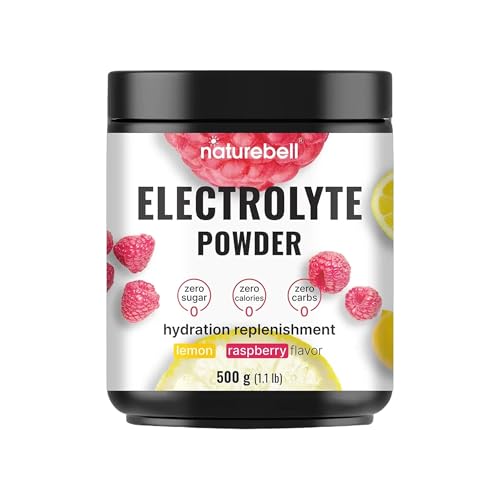
Best for: a shopper who wants one tub, one flavour, no decisions Skip it if: you want the exact milligrams printed on the front
NatureBell's lemon and raspberry tub weighs 1.1 lb and measures 4.06 x 6.26 x 4.06 in. The listing describes a high-potassium formula with magnesium, calcium and essential minerals, made with coconut water and real lemon juice, third-party tested, non-GMO and free of the common allergens. It sits in the mid price band here.
What this pick trades away is granular label detail. The listing describes the formula in claims rather than milligram numbers for every mineral, and the serving count is not stated on the fields I have. If you are the kind of shopper who prints the label and shows it to a doctor, Dr. Berg or Micro Ingredients will serve you better. If you want to open one tub, use a scoop, and get on with your day, this is a clean pick.
The trade-off inside this set is real: it publishes fewer specification figures than any other tub here, so the value of the price position depends on trusting the brand's summary description over hard numbers.
Pros:
- Coconut water and real lemon juice as flavour base
- Third-party tested per the listing
- Mid price band, not the priciest tub
- Compact 4.06 x 6.26 x 4.06 in footprint
- Non-GMO ingredients claim
Cons:
- Milligram figures not itemised on the listing
- Serving count not stated
- Single flavour
- Fewer published specifications than the other tubs
6. Venture Pal High Sodium Sugar Free Electrolytes Powder — Best budget pick
Venture Pal is the smallest box in the guide and the cheapest way to test high-sodium hydration before committing to a bigger supply.

Best for: trying high-sodium hydration before committing to a large tub Skip it if: you drink electrolytes daily and want a bigger supply
Venture Pal ships 16 single-serve packets at 0.17 oz each, in a 2.71 oz box measuring 4.21 x 4.72 x 1.57 in. The listing pitches a high-sodium, sugar-free formula intended for heavy sweaters, and the brand cites research suggesting active individuals may need 1,200 to 3,600mg of additional sodium daily. The variety colour code, V1-variety, points to a mixed-flavour box, and it is the cheapest pick in this set.
For an older adult exploring whether a salty electrolyte helps with lightheadedness on hot days, or supports POTS symptoms as the listing mentions, sixteen packets is enough to know without an over-buy. Mix one packet with 16 to 32 oz of water, according to the listing.
The trade-off is missing detail. Potassium and other mineral figures are not itemised in the specifications I have, only the high-sodium claim, and the box runs out in roughly two weeks at daily use. For daily hydration, one of the tubs will cost less per serving. As a first try, this is the low-commitment door in.
Pros:
- The cheapest of the six
- Portable 0.17 oz single-serve packets
- Variety-flavour box
- High-sodium claim named upfront
- Zero-calorie, zero-sugar per the listing
Cons:
- Only 16 packets, smallest supply here
- Potassium figure not stated in milligrams
- Not for daily long-term use
- High-sodium formula is wrong for restricted diets
What the labels do not tell an older shopper
Marketing copy on this category is loud, but the fields that matter for an older adult are quiet and specific. Three of them repay a careful read before you buy.
- The full potassium figure in context with any medication. 1000mg potassium is a big dose. If a parent or spouse is on an ACE inhibitor, an ARB, spironolactone or another potassium-sparing diuretic, that number needs a pharmacist's eye. Four of these six picks publish 1000mg potassium per serving.
- The sweetener source. Stevia, sucralose, glycine and monk fruit each cause different reactions. INSALTD is the only pick here to name glycine specifically. Older adults with sensitive stomachs often find one sweetener works and another does not; a five-flavour box that all use the same sweetener does not solve that.
- The mixing instructions in ounces of water. Scoops go into 16 oz. Packets go into 16 to 32 oz. If a caregiver is filling a smaller cup, the formula is stronger and the salt taste is more prominent, which changes whether a parent actually finishes the drink.
Two more things to check on the listing page itself: the ingredient list for anything that ends in "-ose" if diabetes is a factor, and the caffeine line. INSALTD's listing states no caffeine. Some competing brands not in this guide add it quietly.
How long does one container actually last?
Supply length is the specification most shoppers underestimate. Here is the arithmetic, plainly.
- INSALTD, 28 packets, at one packet a day: 28 days.
- Venture Pal, 16 packets, at one packet a day: 16 days.
- NatureBell No Sugar (grape), 76 servings, at one scoop a day: about 76 days.
- Dr. Berg, 100 servings, at one scoop a day: about 100 days.
- Micro Ingredients, 139 servings, at one scoop a day: about 139 days.
- NatureBell (lemon raspberry), serving count not stated on the listing.
The gap between the shortest and longest supply in this set is more than four months. For a household where reordering supplements is a chore, that gap is the whole argument for a tub over packets. For a household where a caregiver drops off a week's supply, packets are worth the price gap because they are pre-portioned and travel.
Two practical shopping notes:
- Do not buy for more than three months of daily use on a first order. Taste fatigue with one flavour is real, and returning a half-used tub is harder than reordering.
- If two people in the house will use it, halve the days figure above. Some listings quote a serving as one scoop; two scoops in a bigger glass changes the math again.
When should you skip a high potency powder entirely?
High potency is not always the right answer, and honesty about that is worth more than a sixth pick.
- If your daily sodium is capped below 1,500mg. The packets in this guide will not fit that budget without pushing food sodium unrealistically low. A low-sodium tub is safer, and even those need to be counted into your day.
- If you take a potassium-sparing medication. 1000mg potassium is a dose to clear with a pharmacist before daily use. This is the single most important check for an older adult, and the listings do not do it for you.
- If you are managing kidney function issues. Both sodium and potassium loads matter here, and a "high potency" powder is the wrong shape of product. Ask your care team what target minerals you should hit, then match a product to that brief.
- If you drink electrolytes twice a week or less. A tub of 139 servings is wasted supply. A small packet box, or an ordinary glass of water with a pinch of salt and a squeeze of citrus, may be enough.
None of these are reasons to avoid hydration. They are reasons to buy a different shape of product, or to buy the same product with a stricter dosing rule.
The verdict
INSALTD Sugar-Free Electrolyte Powder Packets is the best high potency electrolyte powder for seniors when the shopper has been cleared for higher sodium and wants the fullest published mineral stack in single-serve packets. 900mg sodium, 300mg potassium, 100mg magnesium and 18mg calcium per 0.23 oz packet, in a 28-count box.
Two conditions flip the pick. First, if daily sodium is capped, Dr. Berg Zero Sugar Hydration Keto is the right buy: 40mg sodium and 1000mg potassium per scoop, 100 servings per 1.46 lb tub, single flavour of raspberry and lemon. Second, if the household drinks electrolytes daily and wants the longest supply per purchase, Micro Ingredients Electrolytes Powder wins on serving count alone at 139 per 2 lb pouch, low-sodium, 1000mg potassium.
Everything else in this guide sits under those three. NatureBell's grape tub is the flavour break, Venture Pal is the trial pack for a high-sodium regimen, and the lemon-raspberry NatureBell is the low-friction default when milligram counting is not the point. Match the pick to the medication list first, the sodium ceiling second, and the flavour third.
FAQ
What makes an electrolyte powder "high potency" for older adults?
High potency for older adults usually means at least 1000mg of a headline mineral, most often potassium, or a stated sodium load above 500mg per serving. Four of these six picks publish 1000mg potassium; INSALTD publishes 900mg sodium. Marketing copy alone does not qualify. Look for the milligrams printed on the label, not just the phrase on the front of the tub.
Is a high potency electrolyte powder worth it for daily use?
A high potency electrolyte powder is worth it for daily use only when your diet, medication and activity actually create the shortfall it addresses. Older adults on diuretics, in hot climates, or eating lightly may benefit. Those on strict sodium caps or potassium-sparing drugs should treat daily use as a medical decision. Match your prescribed limits before the marketing.
How much sodium does INSALTD have compared with Dr. Berg?
INSALTD has 900mg of sodium per 0.23 oz packet, according to the listing. Dr. Berg has 40mg of sodium per scoop, sourced from pink Himalayan salt. That is a 22-fold difference. INSALTD is built for someone adding sodium; Dr. Berg is built for someone managing it downward. Neither is universally correct; the right choice depends on your prescribed daily sodium ceiling.
Which is better for a senior on blood pressure medication, Dr. Berg or Micro Ingredients?
For a senior on blood pressure medication, Dr. Berg is the safer pick if the priority is a stated low-sodium figure at 40mg per scoop with 1000mg potassium. Micro Ingredients also uses a low-sodium formula with 1000mg potassium and gives 139 servings versus 100, but does not itemise its sodium in milligrams on the listing. Choose Dr. Berg for label clarity, Micro Ingredients for supply length.
What is the biggest mistake older shoppers make with electrolyte powders?
The biggest mistake older shoppers make is buying on the front-of-label claim without checking the milligrams against a medication list. 1000mg potassium is a large dose that interacts with common blood pressure drugs, and 900mg sodium is a substantial share of a restricted daily cap. Read the label, note the numbers, and clear both minerals with a pharmacist before daily use.
Start with the medication list on your refrigerator, not the tub on the shelf. Pull the bottles, write down anything that ends in "-pril", "-sartan", or "diuretic", and take that note to a pharmacist along with the two picks that fit your sodium ceiling. Ten minutes of that conversation saves months of the wrong product. Once you know your target minerals, INSALTD is the default for a cleared, higher-sodium shopper, and Dr. Berg is the default when the cap is strict. The category rewards a decision made against numbers, not against packaging.
Last updated: September 7, 2026. Product availability re-checked.
This page contains affiliate links. As an Amazon Associate we earn from qualifying purchases, at no extra cost to you.