Best Wearable Ice Pack for Diabetics: What to Know
Five wearable cold packs compared for diabetic neuropathy, swelling and insulin transport, with the deciding specs and the cautions the listings do not spell out.
The best wearable ice pack for diabetics in this lineup is the Hilph Refillable Neck Ice Pack, because it uses plain ice and water rather than a sub-freezing gel, which lets you dial the temperature by how much ice you add. If you need cold therapy on a limb rather than the neck, the REVIX Ankle Ice Pack Wrap ships as a 2-pack at 2.03 lb total and stays flexible when frozen. Most buyers compare gel volume. Diabetics should compare skin-contact temperature and session length first.
Best wearable ice pack for diabetics at a glance
| Pick | Body area | Fill and flexibility | Price |
|---|---|---|---|
| Best overall Hilph Refillable Neck Ice Pack |
Neck | Ice + water, no freezer needed | Check Price |
| Best for families REVIX Ankle Ice Pack Wrap |
Ankle, heel | -13°F gel, flexible when frozen (claim) | Check Price |
| Best budget pick YOUSHARES Diabetes Ice Packs |
Inside a travel case | Gel, 6.9 × 2.7 × 0.3 in each | Check Price |
| Most versatile Comfytemp Large Ice Pack |
Lower back, shoulder | 15 × 12 in gel panel, 2 straps | Check Price |
| Best premium Hilph Foot Ice Pack Slippers |
Feet, toes | Medical-grade gel, 12.2 × 5.51 in | Check Price |
How I narrowed a crowded category to five
Amazon lists thousands of cold packs, so I applied three cuts. Each is a criterion, not a preference.
- Wearable on the body, not just applied. The pack has to strap, wrap or slip on. A rigid brick with a strap wrapped around a leg is not the same product.
- Reusable or refillable. Single-use chemical cold packs were cut. Diabetic use tends to be repeat use.
- Body-part specificity. Generic rectangles compete poorly with contoured wraps, so at least four of the five picks target a named area: neck, ankle, back, feet.
The keyword here promises a pick suited to diabetics, and Amazon's search returned only one product with diabetes in its title, the YOUSHARES pair meant for insulin cases. I kept it, because insulin transport is a genuine diabetic need, and I built the rest of the shortlist around the two conditions cold therapy is used for most often in diabetic care: peripheral neuropathy and swelling in the feet, ankles or lower back. That gave a lineup that speaks to the reason a diabetic buyer typed the query, without pretending any product carries a diabetes-specific certification. None of these five does.
Why diabetics need to think about cold therapy differently
Two facts change the calculus. Reduced peripheral sensation, which is common in longstanding diabetes, means the usual "if it hurts, take it off" feedback loop is unreliable on feet, ankles and lower legs. And impaired microcirculation slows the skin's ability to rewarm and clear cold-induced damage. Neither is a reason to avoid cold therapy. Both are reasons to insist on three things:
- A cloth barrier between gel and skin. Terry, cotton or even a thin towel. The REVIX wrap and the Comfytemp pack both list soft outer fabrics, which helps, but a separate barrier is still the safer default.
- Timed sessions with a phone alarm. Not a subjective "when it feels done".
- Inspection of the skin after each session for mottling, blisters or persistent pallor.
None of these five listings carries a medical claim for diabetic neuropathy, and you should not read one into them. The Hilph neck pack is interesting here specifically because ice-and-water tops out near 32°F on the skin side, warmer than a sub-freezing gel at -13°F. That is the closest thing to a built-in safety margin in the set.
1. Hilph Refillable Neck Ice Pack — Best overall
A refillable ice-and-water bag that skips the freezer and keeps skin-contact temperature above the sub-freezing range.
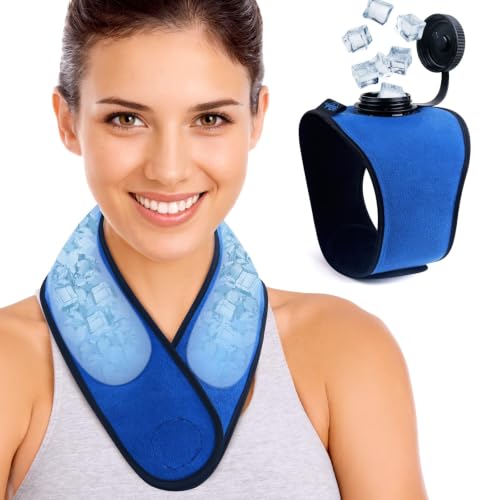
Best for: adults who want cold therapy on the neck without pre-freezing a gel pack Skip it if: you need long unattended sessions or a hands-free fit on a limb
The Hilph is the one pick in this set that does not rely on a frozen gel. Hilph says the pack fills with ice cubes and water through a wide opening, closes with Velcro to the neck contour, and delivers cold for about two hours per fill. That mechanism is the reason it earns best overall for a diabetic buyer: the coldest temperature the skin sees is roughly the melting point of ice, not the -13°F freezing point REVIX quotes for its gel. Warmer contact means slower onset of numbness, which matters when sensation is already blunted. It is also the cheapest of the two entry-tier picks after the YOUSHARES insulin packs, and it does not tie up freezer space next to your medication. The trade-off is real: it only fits the neck, it needs a nearby source of ice, and if you want to leave it on and read for an hour, a frozen gel wrap holds cold longer per session.
Pros:
- No pre-freezing required, so it is ready when you are
- Skin-contact temperature stays near the melting point of ice
- Velcro fit shaped for the neck contour
- Refillable through a wide opening
- Foldable and light to pack
Cons:
- Neck only, no ankle or knee use
- Needs ice on hand, so less convenient than a freezer pack
- Only three sellers list it, and the count is 1 per order
2. REVIX Ankle Ice Pack Wrap — Best for families
A 2-pack of contoured ankle wraps that stay flexible at freezer temperature, with terry outers for a gentler skin feel.

Best for: households that want two matching wraps for ankles, heels or wrists Skip it if: you only need one pack and prefer a larger coverage area
REVIX ships this one as a pair, 2.03 lb for the set, which is the reason it earns the family pick. Two wraps mean two ankles can ice at once, or one is chilling while the other is on the body. REVIX says the gel has a -13°F freezing point that keeps the wrap pliable when frozen, and the outer is a soft terry fabric with a non-slip finish. For a diabetic buyer this is the pick to pair with a thin cotton sleeve or sock, because that low freezing point is the coldest gel in the lineup and terry alone will not slow it enough on numb skin. The 2025 release date makes this the newest listing in the set. It sells faster than the other four here, which is worth knowing because REVIX only has one seller on the offer. The trade-off is size: it is shaped for an ankle, not a back or a shoulder, and it cannot substitute for the Comfytemp panel if the pain is in the lumbar spine.
Pros:
- 2-pack lets you alternate wraps without waiting to refreeze
- Contoured to the ankle and heel, not a flat rectangle
- Terry outer softens the contact surface
- Non-slip fit keeps the pack on during movement
- The newest listing in this set, released 2025
Cons:
- -13°F gel is the coldest in the lineup, so use a cloth barrier
- Ankle-shaped, so limited use on other body areas
- Only one seller lists the item
3. YOUSHARES Diabetes Ice Packs for Diabetic Travel Case — Best budget pick
A slim pair of gel packs sized to slide into an insulin travel case, not to strap onto the body.

Best for: keeping insulin cool inside a travel case on short trips Skip it if: you want a wrap that fastens to a joint for pain relief
Be honest about what this is. YOUSHARES lists dimensions of 6.9 × 2.7 × 0.3 in per pack, and describes them as slim inserts for a diabetes travel case. That is not a wearable wrap in the same sense as the other four picks: you do not strap it to a knee. It earns its slot because it is the only listing in the set filed under Diabetes Care, and because insulin transport is the most common cold-related task a diabetic buyer has. YOUSHARES says the packs are made of nylon, are reusable hundreds of times, and need 8 to 10 hours in a freezer to fully chill. That long chill time is the real limitation: on a same-day trip, they only work if you froze them the night before. The cheapest of the five picks by price rank. Skip it if what you actually need is joint cold therapy, in which case the Hilph neck or REVIX ankle wrap is the right buy.
Pros:
- The cheapest option in this set
- Slim 6.9 × 2.7 × 0.3 in profile fits most insulin cases
- 2-pack lets you rotate one in the freezer
- Nylon shell built for repeat freezing
- Files under Diabetes Care, unlike the others here
Cons:
- Not a wearable wrap, so no strap or contour
- Needs 8 to 10 hours in the freezer before use
- Only one seller stocks the listing
4. Comfytemp Large Ice Pack for Injuries — Most versatile
A 15 × 12 in gel panel with two adjustable straps, sized for the lower back but usable on shoulders or hips.

Best for: lower-back and tailbone pain where a wide gel panel matters Skip it if: you want something small enough to strap to a foot or ankle
The Comfytemp is the largest wearable pack in this lineup, at 15 × 12 in, and Comfytemp says it holds 35% more gel than a standard-sized pack. That extra volume is why it retains cold longer than the smaller wraps, and the two adjustable straps mean you can secure it across the lumbar spine, wrap it around a shoulder, or belt it to a hip. It is the most expensive pick here. For a diabetic buyer with lower-back pain, and there are many, this is the sensible piece to own alongside a smaller wrap for the feet or ankles. The one caution is that a larger cold-gel panel against the skin lowers a wider surface temperature for longer. Use a cloth layer, keep sessions to 15 or 20 minutes, and check the skin afterward. The trade-off against the smaller picks is bulk: this is a panel to put on while you sit or lie down, not something to wear on a walk.
Pros:
- 15 × 12 in coverage is the widest in this set
- Two adjustable straps for back, shoulder or hip
- 35% more gel claim, so longer cold retention
- Double-edged seams for leak resistance
- One-piece build with no separate cover to lose
Cons:
- The most expensive pick here
- Too large for feet, ankles or wrists
- Cold surface area is wide, so a cloth barrier is essential
5. Hilph Foot Ice Pack Slippers — Best premium
Slip-on gel slippers with no straps, sized 12.2 × 5.51 in, for foot and toe cold therapy after surgery or long standing days.
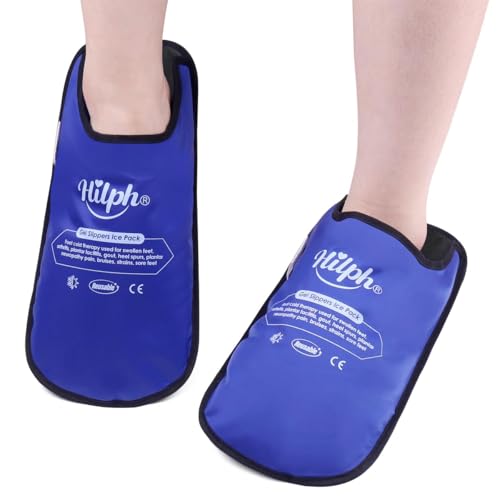
Best for: seniors and post-surgery users who cannot bend to fasten straps Skip it if: you have severe diabetic neuropathy and reduced foot sensation
Hilph pitches these as a 1-pair set of ice slippers, sized 12.2 × 5.51 in, with no straps or buckles and no left or right. Hilph says the filler is a non-toxic medical-grade gel that stays pliable after freezing, and the design wraps the ball, arch and heel in one shape. That slip-on format is the reason it earns best premium: for someone who cannot bend to fasten a strap, or has just had foot surgery, hands-free is not a luxury. It is also the second-most expensive listing here. And this is the pick where diabetic use needs the most caution. Reduced foot sensation is exactly the population these slippers are marketed to, and the same reduced sensation is the reason a cold pack on the foot can cause harm without the wearer noticing. Use a sock underneath, cap the session at 15 minutes, and inspect the toes afterward. If neuropathy is advanced, ice the ankle with the REVIX pair instead and keep the feet out of it.
Pros:
- Slip-on shape, no straps or buckles to fasten
- Sized 12.2 × 5.51 in, unisex, no left or right
- Wraps ball, arch and heel in one shape
- Medical-grade gel that stays pliable when frozen (claim)
- Sold as a pair, one for each foot
Cons:
- The second-most expensive pick in this set
- Direct foot contact is high-risk with diabetic neuropathy
- No adjustable strap means fit depends on foot shape
What actually decides a wearable ice pack?
Not gel volume. Not strap count. What decides a wearable ice pack for diabetics is the combination of skin-contact temperature, session length, and the barrier between gel and skin.
Sub-freezing gels like the -13°F filler REVIX quotes are efficient because they hold cold longer per weight. That efficiency is a problem on numb skin, where the wearer cannot feel that the surface has crossed into freezing-injury range. Ice-and-water systems like the Hilph neck pack cap out near 32°F on the contact side, which is the closest thing to a passive safety feature in this category.
The other lever is session length. 15 to 20 minutes on, at least 40 minutes off. Set a timer on your phone. A pack that retains cold for two hours does not mean two hours on the skin.
How long does each pick stay cold?
Only Hilph publishes a duration figure, and only for the neck pack. Here is what the listings do and do not tell you:
- Hilph neck pack: about 2 hours per fill of ice and water, per the listing.
- REVIX ankle wrap: no stated duration, but the -13°F gel and terry outer suggest a longer hold than the ice-and-water system.
- YOUSHARES insulin packs: no wear duration, since the packs live inside a case rather than on the body. Chill time is 8 to 10 hours.
- Comfytemp back pack: no stated duration, but the 35% larger gel volume suggests a longer hold than the smaller wraps.
- Hilph foot slippers: no stated duration.
For a diabetic user, the missing durations matter less than session length. Cap your sessions regardless of what the pack could theoretically do.
Neck, foot, ankle or back: which body part first?
If you are buying one pack, buy for the pain you have, not the pain you might have. A quick decision tree:
- Neck stiffness, tension headaches, cervical pain: Hilph refillable neck pack.
- Ankle swelling, heel pain, plantar fasciitis without severe neuropathy: REVIX ankle wrap 2-pack.
- Lower back or tailbone pain, sciatica flares: Comfytemp large panel.
- Foot pain after surgery, standing all day, hands-free need: Hilph foot slippers, with caution.
- Insulin transport for travel: YOUSHARES diabetic ice packs.
If two areas are equally sore, start with the neck or the back. Those areas have thicker skin and better blood flow, and they carry the lowest cold-injury risk in a diabetic user.
What the listings do not tell diabetic buyers
Three things the product pages leave out.
- None of these five is a medical device. They are cold packs sold as recovery aids. That means no dosing guidance, no diabetic-specific warnings, and no clinical claims. Ask your endocrinologist or podiatrist before regular use on the feet, especially if you have a neuropathy diagnosis.
- A "leak-proof" claim is not a guarantee. Comfytemp and REVIX both mention leak-resistant seams. Both are gel packs and gel packs eventually fail. Store them in a plastic bag inside the freezer.
- Refreezing time is often longer than session time. For any of the gel packs, expect 6 to 10 hours in the freezer between sessions to fully rechill. Buy pairs, or buy the Hilph refillable, if you need back-to-back sessions.
The verdict
If you want one pick, buy the Hilph Refillable Neck Ice Pack. It is the only wearable in this lineup that does not depend on a sub-freezing gel, which makes it the most forgiving choice for skin that may not report cold accurately. It fills with ice and water in seconds, folds flat, and holds cold for about two hours per fill.
If your pain is in a limb rather than the neck, the answer flips. Buy the REVIX Ankle Ice Pack Wrap for its 2-pack format, its contoured fit, and its terry outer, and pair it with a thin sock or sleeve on the skin side to soften that -13°F gel. If your pain is in the lower back, the Comfytemp panel is the right shape.
The cutoff is body area, not price. Ice-and-water for the neck, contoured gel for the ankle, wide panel for the back. And if what you actually needed was insulin transport, buy the YOUSHARES pair and save the money for the wrap you will use for pain relief separately.
FAQ
Is a wearable ice pack safe for diabetics with neuropathy?
A wearable ice pack can be safe for diabetics with neuropathy when used with three habits: a cloth barrier between gel and skin, a timed session of 15 to 20 minutes, and a skin check afterward. The concern is that reduced sensation delays the normal "too cold" signal. Talk to your care team before regular icing of the feet, especially if you have an existing ulcer, poor circulation or advanced peripheral neuropathy.
Is the Hilph refillable neck pack worth it over a frozen gel pack?
The Hilph refillable neck pack is worth it if you value not having to plan ahead. Frozen gel packs need 6 to 10 hours in the freezer before use, and they land on the skin at sub-freezing temperature. The Hilph uses ice and water, so its contact temperature stays near 32°F and it is ready in the time it takes to fill. The trade-off is you need ice cubes nearby.
Can I use the YOUSHARES ice packs on my body, not just in an insulin case?
You can technically press the YOUSHARES ice packs against skin, but they were designed as slim inserts for a diabetes travel case at 6.9 × 2.7 × 0.3 in, with no strap system and no contour. There is no way to secure them to a joint. If you want cold therapy on the body, pick the Hilph neck wrap, the REVIX ankle wrap or the Comfytemp back panel instead.
How does the REVIX ankle wrap compare to the Hilph foot slippers?
REVIX ankle wrap vs Hilph foot slippers comes down to where the pain is and how you fasten the pack. REVIX ships as a 2-pack of shaped wraps that strap around the ankle joint, and works well for swelling and sprains. The Hilph slippers are slip-on and cover the whole foot, better for plantar fasciitis and post-surgery use. For advanced neuropathy, the ankle wrap keeps direct cold off the toes.
How long should I wear a cold pack per session as a diabetic?
Wear a cold pack per session for 15 to 20 minutes at most, with at least 40 minutes off before the next session. Use a phone timer rather than judging by feel, since diabetic neuropathy can blunt the sensation of cold. Always place a thin cloth between the gel and the skin, and inspect the area for redness, blisters or lasting pallor after each session before repeating.
Cold therapy is one of the cheapest tools a diabetic household can keep on hand, and the barrier to entry here is measured in the price of a paperback. Start with the pain you actually have. If that is neck tension, buy the Hilph refillable and keep it in a drawer with a scoop for ice. If it is foot or ankle swelling, buy the REVIX pair and a sleeve of cotton socks to layer under it. Add the Comfytemp back panel later if lumbar flares are part of the picture. The best wearable ice pack for diabetics is the one that fits the body part that hurts today, used with a barrier, a timer and a skin check.
Last updated: September 7, 2026. Product availability re-checked.
This page contains affiliate links. As an Amazon Associate we earn from qualifying purchases, at no extra cost to you.