Best Eye Drops for Irritated Eyes From Contacts
Six drops compared for contact-lens irritation, with the one drop you should never put in over lenses named early, and the mid-day rewet that solves most of it.
The best eye drops for irritated eyes from contacts are Opcon-A Allergy Eye Drops when the irritation is allergy-driven itch, because the 0.5 fl oz twin pack pairs an antihistamine with a redness reliever in one bottle. If the problem is mid-day dryness while your lenses are still in, REFRESH CONTACTS is the pick you want, since it's the only bottle here labelled as a contact lens rewetter at 0.4 fl oz.
Here's the trick with this category. Most guides compare drops on how "soothing" they feel, and that comparison misses the one thing that actually matters: whether the drop can go in over a contact lens at all. Some of these bottles are formulated to be dripped onto a lens. Others are for use with your contacts out. Mixing those up is the real reason irritation gets worse instead of better, and it's why the winner depends on which situation you're in.
Best eye drops for irritated eyes from contacts at a glance
| Pick | Use case | With lenses in? | Price |
|---|---|---|---|
| Best overall Opcon-A Allergy Eye Drops |
Allergy itch, redness | Manufacturer does not label for lens use | Check Price |
| Best minimal setup REFRESH CONTACTS Rewetting Drops |
Rewetting soft and RGP lenses | Yes, per the listing | Check Price |
| Best budget pick Systane Ultra Lubricant Drops |
Dry, tired eyes | Not labelled for lens use | Check Price |
| Best upgrade Bausch+Lomb Advanced Eye Relief |
Dry-eye lubrication, 0.5 fl oz | Not labelled for lens use | Check Price |
| Best premium Biotrue Hydration Boost |
Preservative-free hydration | Not labelled for lens use | Check Price |
| Best for pros Lumify Redness Relief |
Cosmetic redness relief | Not labelled for lens use | Check Price |
Which drops go in with lenses, and which do not?
Only one bottle in this six-pick set is labelled by the manufacturer as a contact lens rewetter: REFRESH CONTACTS. The listing states you may keep your contacts in during application, and calls out compatibility with soft lenses and rigid gas permeable lenses including silicone acrylate and fluorosilicone acrylate materials. That is the label wording, not a general permission slip for the other five.
The other five products in this shortlist do not carry that "safe with contacts in" statement on their listings. Some are labelled for dry eye. Some target allergy itch. One is a cosmetic redness reliever. None are described as rewetters for a lens sitting on your cornea. The safe read: use those with your lenses out, wait the interval your eye doctor recommends before putting lenses back in, and treat the label as the rule.
Here is the practical split:
- Lenses in, mid-day rewet: REFRESH CONTACTS.
- Lenses out, then treat the underlying problem: Opcon-A for allergy, Systane Ultra or Bausch+Lomb Advanced Eye Relief for dryness, Biotrue for preservative-free hydration, Lumify for cosmetic redness.
If you only take one thing from this guide, take that split.
How I screened the shortlist
I built this list by working through the criteria that decide whether an eye drop is useful to a contact wearer, in the order they matter. Weights are mine.
- Lens compatibility (40%). Is the drop labelled for use with lenses in, or does it require lens removal? This is the first cut because getting it wrong causes irritation instead of relieving it.
- What it treats (30%). Allergy itch, mechanical dryness, redness, and general lubrication are different problems with different active ingredients.
- Preservative status (15%). Sensitive eyes react to preservatives, especially with repeat daily use.
- Bottle format and size (10%). A pocketable 0.14 fl oz bottle serves a different reader than a 0.5 fl oz desk bottle.
- Set fit (5%). I kept picks that give the guide range, not six lubricating drops with different labels.
That is why the winner is not the cheapest option or the one buyers choose most often here. Lumify has the lowest sales rank number in this set, meaning it sells faster than the rest, but its own listing frames it as a redness reliever for whiter, brighter looking eyes, not a contact-lens irritation drop. It earns a place, on the right terms.
1. Opcon-A Allergy Eye Drops — Best overall
The right first pick when contact-lens irritation is really allergy itch that gets worse the moment a lens goes on.
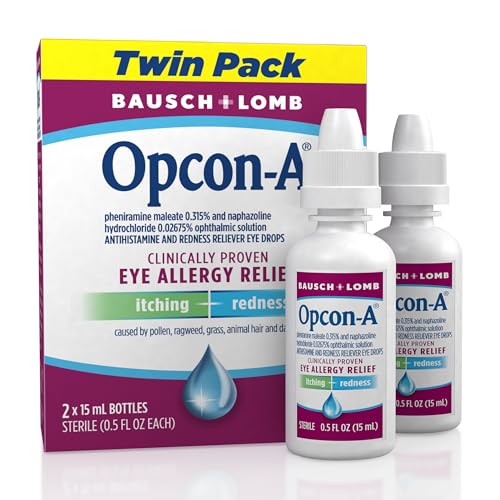
Best for: seasonal allergy itch behind your lenses Skip it if: you want to drop it in with contacts still on
Contact lenses trap allergens against the cornea. Pollen and dander that would normally rinse away in a tear film get held there instead, and the itch that follows is not the same problem as dryness. Opcon-A is the only pick in this six-product set that combines an antihistamine with a redness reliever in one bottle, and Bausch + Lomb positions it exactly that way, calling out pollen, ragweed, grass, animal hair and dander in the listing text. The format is a 0.5 fl oz twin pack, so the box holds two bottles at 2.08 oz total weight, in a 3.4 x 2.6 x 1.1 in package. The manufacturer describes the formula as clinically proven for redness and itch from allergens; that is their claim, not a measured comparison against the other five here.
The trade-off is that this is not labelled as a drop you put in over a contact lens. Use it with lenses out, then follow your eye doctor's timing before putting them back in. That extra step is why it is not also the pick for mid-day rewetting.
Pros:
- Combined antihistamine and redness reliever, unique in this set
- 0.5 fl oz twin pack, most volume per box here
- Names the exact allergens contacts trap against the eye
- From a 150-year eye care brand per the listing
Cons:
- Not labelled for use with contact lenses in
- Only helps if the irritation is allergy-driven
- Mid-range price position in this set
2. REFRESH CONTACTS Contact Lens Comfort Drops — Best minimal setup
The only bottle in this shortlist the manufacturer says you can use with contacts still on.

Best for: mid-day rewetting without taking lenses out Skip it if: the real problem is allergy itch, not dryness
If you only want to do one thing, this is the drop for it. The listing states you may keep your contacts in during application, and describes the drops as cushioning lenses prior to application, lubricating and rewetting them once they are in. Refresh lists compatibility with soft lenses and rigid gas permeable lenses, including silicone acrylate and fluorosilicone acrylate materials, which covers most modern prescriptions. The bottle is 0.4 fl oz, weighs 11.3 g, and measures 3.6 x 1.15 x 1.8 in, which is small enough for a jacket pocket or a work-bag side sleeve. The model is 91822US and it has been on the market since 2005, so the format is settled.
Its limit is that this is a rewetter, not an itch treatment. If your problem is allergy season and your eyes are inflamed as well as dry, this will not fix it, and you will end up reaching for Opcon-A after lenses are out. Set-wise, it is the drop that solves the specific "my contacts feel dry at 3 pm" problem better than anything else here.
Pros:
- Labelled by Refresh for use with lenses in
- Compatible with soft and RGP lenses per the listing
- Pocketable bottle at 3.6 x 1.15 x 1.8 in
- Mid-range price position
Cons:
- Rewetter only; no antihistamine or redness relief
- 0.4 fl oz is a smaller bottle than the twin packs here
- Not preservative-free
3. Systane Ultra Lubricant Dry Eye Drops — Best budget pick
The cheapest of the six and a sensible first bottle for screen-tired eyes once lenses are out.
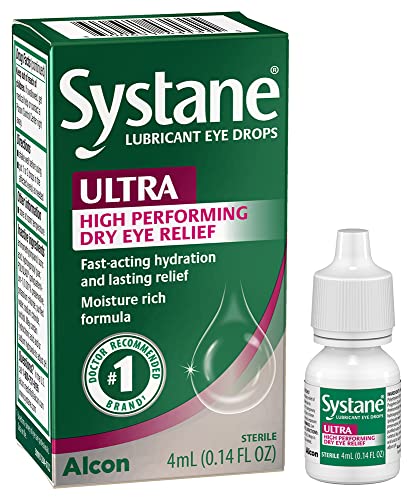
Best for: screen-tired eyes after you remove lenses Skip it if: you need a preservative-free formula
Systane Ultra is the cheapest of the six here, and it is the pick I would start with for someone whose contact-lens irritation is really the tail end of a long screen day. The bottle is 0.14 fl oz, weighs 3.97 g, and measures 3.31 x 1.28 x 1.78 in, so it slips into a laptop bag without notice. Systane's listing calls this a doctor-recommended brand of artificial tears with fast, long-lasting dry-eye symptom relief; that is their positioning, not a claim you should read as ranked against every other artificial tear on the shelf. The model is 0065143131 and the format has been on shelves since 2017.
The reason it is not the winner is set fit. It is a lubricant, not a lens rewetter, and it does not address allergy itch. It also comes in the smallest bottle volume in this group at 0.14 fl oz, so daily users will refill sooner than with the 0.5 fl oz options. As a starter bottle at the lowest price position here, it earns its place; as your only bottle if you wear lenses every day, it will not go the distance.
Pros:
- Cheapest of the six in this shortlist
- Compact 3.31 x 1.28 x 1.78 in bottle
- Positioned as artificial tears for dry-eye symptoms
- Long-standing formula, on sale since 2017
Cons:
- 0.14 fl oz is the smallest bottle here
- Not labelled for use with contacts in
- No antihistamine for allergy itch
4. Bausch+Lomb Advanced Eye Relief Lubricant — Best upgrade
A larger 0.5 fl oz lubricant bottle for people who reach for drops several times a day after lens removal.
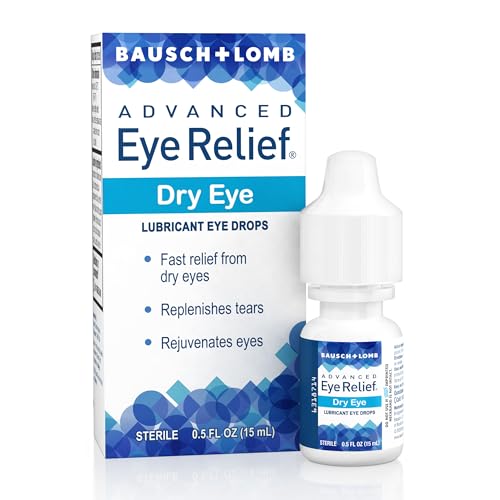
Best for: heavier dry-eye relief after a long lens day Skip it if: you want a compact bottle for a bag
This is the drop I would upgrade to if Systane Ultra is running out too fast. The bottle is 0.5 fl oz (15 mL), which matches Opcon-A's per-bottle volume and is more than three times the Systane bottle by volume. Bausch + Lomb's listing describes it as a lubricant that soothes, refreshes and comforts irritated eyes, replenishes tears for fast relief from dry-eye symptoms, and can be used as often as needed. Those are their words; treat the "as often as needed" line as guidance to check against your own eye doctor's advice, especially if you're already using a rewetter with lenses in during the day.
The dimensions are 7.25 x 1.88 x 1.88 in, which is a taller bottle than the pocketable Systane, so this is a desk drawer or nightstand bottle rather than a handbag one. Interestingly, this sits in the entry price band and is second-cheapest here, which is why it earns the upgrade slot over the premium options. Its weakness in this set is that it, too, is not labelled for use with lenses in, so it is a lenses-out drop.
Pros:
- 0.5 fl oz bottle, largest single-bottle volume here
- Second-cheapest of the six in this set
- Positioned for use as often as needed per the listing
- Straightforward lubricant, no active drug ingredient
Cons:
- Tall bottle at 7.25 in, not pocket-friendly
- Not labelled for use with contacts in
- Only one bottle per pack
5. Biotrue Hydration Boost Preservative-Free Eye Drops — Best premium
The preservative-free option for eyes that flare up on repeat daily dosing.

Best for: sensitive eyes that react to preservatives Skip it if: the smallest bottle in the set is a dealbreaker
Biotrue Hydration Boost is the most expensive pick here and the only one this shortlist that Bausch + Lomb explicitly labels as preservative-free, in a multi-dose bottle. Biotrue's listing lists hyaluronan (HA), an antioxidant and an electrolyte as the featured ingredients, and describes the drops as pH balanced for comfort. The pitch is dry, irritated eyes from screen and environmental stressors, which is the exact profile of most contact-lens end-of-day discomfort. Size is 0.33 fl oz per bottle in a pack of two, and the format has been on sale since 2021, making it the newest of the six.
The reason to pay the premium is genuinely narrow: if your eyes react to the preservatives common in multi-dose lubricants, this is the bottle. If they don't, the Bausch + Lomb Advanced Eye Relief bottle above delivers a larger single bottle in the entry price band. Its trade-off in this set is a smaller bottle than the two 0.5 fl oz options, at the highest price position of the six.
Pros:
- Preservative-free, unique to this set
- Multi-dose bottle without preservatives per the listing
- Twin pack format for a shared drawer
- Newest release date in this group, 2021
Cons:
- Most expensive pick here
- 0.33 fl oz bottles, smaller than the 0.5 fl oz options
- Not labelled for use with contacts in
6. Lumify Redness Relief Eye Drops — Best for pros
A cosmetic redness reliever for after lenses are out, not a treatment for the underlying irritation.

Best for: cosmetic redness relief after lenses are out Skip it if: you're wearing contacts right now
Lumify is the one buyers choose most often here by a wide margin, and it sits in the premium price band. It earns a place because contact wearers reach for it, but you need to know what it is and what it isn't. Lumify's listing describes it as an over-the-counter drop containing brimonidine that selectively targets redness to reveal whiter, brighter looking eyes. It is FDA approved, contains no bleach or dyes per the listing, and Bausch + Lomb positions it as a cosmetic redness reliever rather than an all-purpose irritation fix. The bottle is tiny at 0.08 fl oz (the listing shows 2.5 mL), 13.6 g in weight, and 3.44 x 1.69 x 1.06 in.
Two things to internalise. First, this treats how your eyes look, not why they are irritated behind a contact lens. If the underlying cause is dryness or allergy, the drop that addresses that cause is the one you want first, then Lumify if you also need to look less red. Second, it is not labelled for use with lenses in. It goes in with contacts out, and you follow the timing on the box before putting them back on your eye.
Pros:
- Brimonidine-based redness reliever per the listing
- Compact 3.44 x 1.69 x 1.06 in bottle
- FDA approved and free of bleach or dyes per the label
- Sells faster than the rest of this set
Cons:
- 0.08 fl oz is by far the smallest bottle in this group
- Cosmetic redness only; not for underlying dryness or itch
- Premium price band
- Not labelled for use with contacts in
What actually irritates eyes in contacts
Contact-lens irritation is not a single problem, and that is why one universal drop does not exist. There are three overlapping causes, and the right drop depends on which one is dominant in your case.
- Mechanical dryness. The lens sits on your tear film. Long screen sessions reduce your blink rate, the tear film thins, and the lens rubs. Rewetters like REFRESH CONTACTS are built for this.
- Allergen trapping. A lens holds pollen, dander and other airborne particles against the cornea. Antihistamine drops like Opcon-A target this, but they are used with lenses out.
- Preservative sensitivity. Frequent dosing of preserved lubricants can itself irritate sensitive eyes. Preservative-free formulas like Biotrue address this.
Most shoppers miss that these three need different bottles. Buying one lubricant and expecting it to solve allergy itch, or buying one antihistamine and expecting to drip it over a lens, is the source of most of the "these drops didn't work" complaints in this category.
If your eyes are red versus itchy versus dry
The word "irritated" hides three different signals. Match the signal to the drop before you buy.
- Red, not itchy, not particularly dry. Lumify is the cosmetic answer, used with contacts out. It does not treat the underlying cause; it addresses the look.
- Itchy, especially seasonally. Opcon-A. Take the lenses out first. Expect the itch to be the primary symptom, with redness as a secondary one.
- Dry, gritty, worse late in the day. Systane Ultra or the larger Bausch+Lomb Advanced Eye Relief bottle. Preservative-free Biotrue if your eyes flare up on repeat daily dosing.
- Dry while lenses are still in and you cannot take them out. REFRESH CONTACTS is the specific tool for that window.
The cutoff is whether the lens is on your eye at the moment you need relief. Lens on: rewetter. Lens off: match to the sensation.
How long a bottle really lasts
Bottle volume is worth reading before you buy, because these six differ by more than 6x on that one figure.
- Opcon-A: 0.5 fl oz per bottle, two bottles per pack (largest per-box volume)
- Bausch+Lomb Advanced Eye Relief: 0.5 fl oz (largest single bottle)
- REFRESH CONTACTS: 0.4 fl oz
- Biotrue Hydration Boost: 0.33 fl oz per bottle, two per pack
- Systane Ultra: 0.14 fl oz
- Lumify: 0.08 fl oz (2.5 mL per the listing)
If you dose multiple times a day, the 0.08 fl oz Lumify bottle empties fast, and the twin packs give more room. If you carry a bottle in a pocket, the 7.25 in Bausch+Lomb bottle is too tall and the Systane 3.31 in bottle fits. Match volume to how you'll actually use it, not just to price position.
The verdict
Opcon-A Allergy Eye Drops is the pick I'd start with for irritated eyes from contacts, because contact lenses trap the exact allergens (pollen, dander, ragweed, grass) that this bottle is built to counter, and the 0.5 fl oz twin pack means you keep a bottle in two places. It is a lenses-out drop, so pair it with the timing your eye doctor recommends before reinserting.
If your problem is not allergy itch but a lens that dries out mid-afternoon while it is still on your eye, REFRESH CONTACTS is the winner instead. It is the only bottle in this shortlist labelled by the manufacturer for use with contacts in, and it lists compatibility with soft lenses and rigid gas permeable lenses at 0.4 fl oz.
The other four fill honest gaps. Systane Ultra is the cheapest here and a fine first bottle for post-lens screen fatigue. Bausch+Lomb Advanced Eye Relief upgrades that to a 0.5 fl oz bottle in the entry price band. Biotrue Hydration Boost is the preservative-free choice for reactive eyes. Lumify is a cosmetic redness reliever for lenses-out use, not an all-purpose irritation fix.
FAQ
Can I use any of these eye drops with my contacts still in?
Any of these eye drops used with contacts still in should be limited to REFRESH CONTACTS, based on the listings. Refresh states you may keep your contacts in during application and lists compatibility with soft lenses and rigid gas permeable lenses. The other five bottles here are not labelled for use with lenses in place, so treat them as lenses-out drops and follow your eye doctor's timing before reinserting.
Are the best eye drops for irritated eyes from contacts the same as regular dry eye drops?
The best eye drops for irritated eyes from contacts overlap with dry-eye drops but are not identical. Dry-eye lubricants like Systane Ultra and Bausch+Lomb Advanced Eye Relief cover the dryness component. Allergy drops like Opcon-A cover the itch that lenses aggravate. Only Refresh Contacts here is labelled specifically as a contact lens rewetter for use with lenses in.
Is Lumify worth it if I wear contacts every day?
Lumify is worth it if your specific goal is cosmetic redness relief once your lenses are out. The listing describes it as a brimonidine-based redness reliever, FDA approved and free of bleach or dyes. It is not labelled for use with lenses in and it does not address dryness or allergy itch, so it works alongside a rewetter or lubricant rather than replacing one.
Opcon-A versus Refresh Contacts, which should I buy first?
Opcon-A versus Refresh Contacts comes down to what you feel first. Opcon-A is the antihistamine and redness reliever twin pack at 0.5 fl oz each, aimed at allergy itch, used with lenses out. Refresh Contacts is a 0.4 fl oz rewetter labelled for use with contacts in. If itch is the main sensation, start with Opcon-A. If dryness mid-day is the main sensation, start with Refresh Contacts.
What should I avoid when buying eye drops for irritated eyes from contacts?
Avoid three habits when buying eye drops for irritated eyes from contacts. First, do not drip a drop over a lens unless the listing says you can, as only Refresh Contacts here does. Second, do not treat a cosmetic redness bottle like Lumify as a fix for underlying dryness. Third, if you dose multiple times a day, consider preservative-free options like Biotrue Hydration Boost.
Start with the sensation, not the shelf. If your eyes itch behind your lenses in spring, buy Opcon-A and treat the allergen problem after you take contacts out. If they feel dry at 3 pm and popping the lens out at work is not realistic, buy REFRESH CONTACTS and keep the small bottle in your bag. Everything else in this shortlist is a supporting bottle: a cheap daily lubricant, a larger upgrade, a preservative-free option, a cosmetic redness reliever. Match the bottle to the moment, follow the label on lens compatibility, and check with your eye doctor before you add anything to a daily lens routine.
Last updated: September 7, 2026. Product availability re-checked.
This page contains affiliate links. As an Amazon Associate we earn from qualifying purchases, at no extra cost to you.