Best Eye Drops for Severe Dry Eye: Systane Leads
Five artificial tears compared on format, formula and refill size, with clear guidance on which fits daytime relief, bedtime gel and preservative-free routines.
The best eye drops for severe dry eye in this lineup are Systane Ultra Lubricant Dry Eye Drops, sold as a 0.33 fl oz twin pack that lasts most daily users several months. If you need preservative-free hourly dosing, Refresh Plus with 70 single-use containers of 0.4 mL each is the better buy. A quick note on the search term: "severe dry eye" is a clinical description, and no over-the-counter drop treats the underlying disease. What these products do is manage symptoms.
Best eye drops for severe dry eye at a glance
| Pick | Format | Preservative-free? | Price |
|---|---|---|---|
| Best overall Systane Ultra Lubricant Dry Eye Drops |
0.33 fl oz bottle 2-pack |
No | Check Price |
| Best for pros Refresh Optive Mega-3 PF Lubricant Eye Drops |
0.33 fl oz soft-squeeze bottle | Yes | Check Price |
| Runner-up Blink GelTears Lubricating Drops |
0.34 fl oz gel bottle | No | Check Price |
| Best premium Refresh Plus Lubricant Eye Drops |
70 single-use vials 0.4 mL each |
Yes | Check Price |
| Best budget pick Systane Ultra Lubricant Dry Eye Drops |
0.14 fl oz bottle | No | Check Price |
Who this guide is not for
Before the picks, a plain warning. If your eyes hurt every day, if your vision blurs and clears with each blink, if you cannot wear contacts anymore, or if your ophthalmologist has used the phrase "severe dry eye disease" with you, over-the-counter artificial tears are not your answer on their own. The real work in that case is done by prescription treatments, punctal plugs, warm compresses and lid care, all guided by an eye specialist.
Everyone else, the drops below are the tools you reach for between appointments and during flare-ups. Screen fatigue, air conditioning, contact lens dryness, that gritty end-of-day feeling: this is the territory these five bottles cover.
If your symptoms are worsening month by month, book an eye exam before you buy another bottle. No drop in this guide changes that advice.
How I narrowed the field to five bottles
Three cuts shaped this list, and each removed a category of product that would otherwise clutter the shortlist.
- Redness relievers. Drops containing vasoconstrictors shrink blood vessels to hide the red. They do not lubricate. For dry eye they can rebound and worsen symptoms, so nothing marketed that way made the cut.
- Prescription-strength formulas. Cyclosporine, lifitegrast and their peers change how your eyes make tears. They belong to an eye doctor's plan, not to a general shortlist.
- Contact lens rewetting solutions. These are formulated to work with lens material and do not carry enough lubricant for symptomatic dry eye on bare eyes.
What survived: five artificial tears at different levels of viscosity, in three different formats. Two multidose bottles from Systane (a 0.33 fl oz twin pack and a 0.14 fl oz single). One preservative-free multidose soft-squeeze bottle from Refresh. One thicker gel from Blink for end-of-day and overnight use. One box of 70 preservative-free single-use vials from Refresh Plus, at 0.4 mL each.
Then I ranked them by format, formula fit and price position within the group.
1. Systane Ultra Lubricant Dry Eye Drops (0.33 Fl Oz, 2 Pack) — Best overall
A familiar daytime drop in the twin-pack size most daily users actually need.

Best for: daily daytime relief from a familiar multidose bottle Skip it if: you need a preservative-free formula for hourly dosing
Systane's Ultra formula in the 0.33 fl oz size, packaged as two bottles, wins this shortlist on volume and versatility. Systane describes its drops as providing extended protection and fast, long-lasting relief. That is the manufacturer's claim, not a measured figure, and dry eye response varies from person to person. What is not in dispute is the practical arithmetic: 0.33 fl oz per bottle, two bottles in the pack, so if you dose four to six times a day you get a supply that stretches well past a single-bottle purchase.
Among the best eye drops for severe dry eye symptoms in this set, the multidose Systane bottle is the one that sits in the most desks, handbags and glove boxes. It is not preservative-free, so if your dosing goes hourly you should switch to a preservative-free option for at least part of the day. It also carries the premium price position of the five picks, though the twin pack cushions that.
Pros:
- Twin pack, 0.33 fl oz per bottle, plenty for daily use
- Ranks second on sales of the five picks here
- Manufacturer claims extended protection through the day
- Multidose bottle is familiar and easy to travel with
Cons:
- Not preservative-free
- Sits in the premium price position of the set
- Bottle format not ideal for hourly dosing
2. Refresh Optive Mega-3 PF Lubricant Eye Drops — Best for pros
Preservative-free relief in a soft-squeeze bottle designed for frequent daily dosing.

Best for: heavy users who want preservative-free drops in a soft-squeeze bottle Skip it if: you prefer sealed single-use vials for travel
This is the pick for someone whose dry eye already dictates their day. Refresh Optive Mega-3 PF is a preservative-free artificial tear supplied in a 0.33 fl oz (10 mL) soft-squeeze multidose bottle, and the listing describes a double lockout system that keeps drops sterile between doses. That is the manufacturer's claim, and it is the design point that matters: preservative-free without the vial waste.
Refresh says one drop provides more than ten hours of dry eye relief, citing internal data on file. Treat that as the upper end of expectation, not a promise. The formula is described as enhanced with antioxidants and plant-based flaxseed oil, which contains omega-3s as inactive ingredients. Among the best eye drops for severe dry eye that also allow unrestricted daily dosing frequency, this is the most flexible option in the set. It sells at a mid price position here and has the lowest sales rank of the group, meaning it moves faster than the other four.
Pros:
- Preservative-free multidose format
- 0.33 fl oz bottle, largest volume of the picks
- Manufacturer cites 10+ hours of relief from one drop
- The fastest seller of the five here
Cons:
- Multidose bottle is bulkier than a vial for a bag
- Manufacturer claims dominate the specification sheet
- Newer product with a shorter track record
3. Blink GelTears Lubricating Drops — Runner-up
A thicker gel formula that shines at the end of a long screen day.
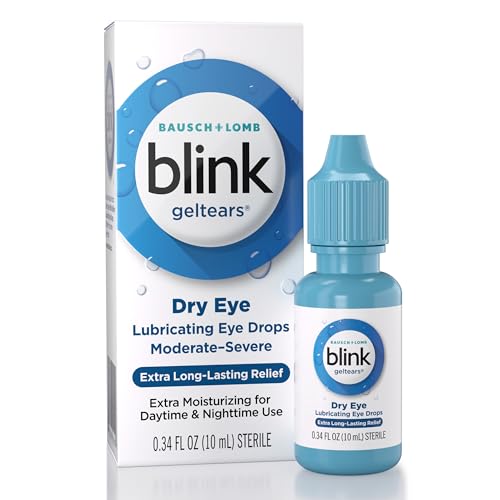
Best for: end-of-day comfort and overnight use when a thicker gel helps Skip it if: you wear contact lenses during the day
Blink GelTears is the only gel in this shortlist, and gel is a different tool from watery drops. A gel sits on the eye longer and pulls fewer, larger tears from you between blinks. That is why the manufacturer names it for day and night use and highlights end-of-day comfort. Blink also describes the formula as boosted with hyaluronate for hydration, which is a common ingredient in dry eye products.
The bottle is 0.34 fl oz, the entry price position of the group, and the second-cheapest of the five. It is also the slowest seller of the set by sales rank, which likely reflects the fact that gel is a specialised choice rather than a first bottle to reach for. If your problem is worst on the sofa in the evening, or if you wake with your lids stuck shut, this is the format that helps. It will blur vision briefly on instillation. Do not put it in before you drive.
Pros:
- Only gel-viscosity option in this set
- Entry price position of the five
- Manufacturer names day and night use
- Hyaluronate listed among ingredients
Cons:
- Slowest seller of the set here
- Brief blur on instillation, not for driving
- Not for use with contact lenses in
- Not preservative-free
4. Refresh Plus Lubricant Eye Drops (70 Single-Use Containers) — Best premium
Seventy sterile single-use vials, the format eye specialists recommend for frequent dosing.

Best for: sensitive eyes and hourly dosing with sterile single-use vials Skip it if: you dislike the waste of 70 individual containers
Refresh Plus in the 70-count box is the format specialists most often point to for sensitive eyes and heavy dosing. Each vial holds 0.4 mL of preservative-free artificial tears and is sealed until you twist the top. Use one, discard the rest, no contamination path, no benzalkonium chloride sitting on an inflamed ocular surface every hour. This is the pick for someone whose day involves ten or more doses.
The box carries the premium price position of the five picks, and it is the pick that sells fastest of any within its category here by sales rank. The trade-off is waste: 70 tiny plastic containers per box, and each vial holds more than a single dose, so you either use it twice within a few hours or throw away useful product. The listing describes the formula as an original-strength lubricant safe to use as often as needed, marketed at mild symptoms rather than severe, so read the box before you assume it matches your case. Older product, released in 2005, with a long track record.
Pros:
- 70 sealed single-use vials, preservative-free
- Fastest seller of the picks here
- Vials suit sensitive eyes and hourly dosing
- Long track record on the market
Cons:
- Premium price position of the set
- Considerable single-use plastic waste
- Labelled for mild symptoms, not severe
- Half a vial is often wasted
5. Systane Ultra Lubricant Dry Eye Drops (0.14 Fl Oz) — Best budget pick
The smallest Systane Ultra bottle, the cheapest way in and the easiest to carry.
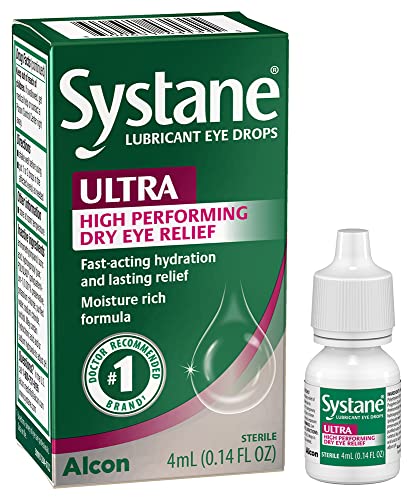
Best for: a small bottle to test the Systane Ultra formula or keep in a bag Skip it if: you already know you'll go through drops daily
Same Systane Ultra formula as the winner, smaller bottle. At 0.14 fl oz, this bottle is less than half the volume of the twin-pack version, and it sits in the cheapest price position of the five picks. That combination has two clear uses. First, if you have not tried Systane Ultra before and you want to know how your eyes react, a small bottle is the sensible test. Second, if you already like the formula but want a spare that lives in a jacket pocket or a bag, this is the size for that.
What it is not, is your main supply. Daily dosing will run this bottle out fast, and the per-drop math is the reason the twin pack wins overall. Bottle dimensions of 3.31 x 1.28 x 1.78 in make it genuinely pocketable. Model number 0065143131, released 2017. Not preservative-free, same caveat as the winner.
Pros:
- Cheapest of the five picks
- Same Systane Ultra formula as the winner
- Small, pocketable 0.14 fl oz bottle
- Good way to trial the formula
Cons:
- Runs out fast with daily use
- Not preservative-free
- Poor value per millilitre compared with the twin pack
Does 'severe dry eye' on the label mean anything?
It depends who put it there. Only one product in this shortlist, Blink GelTears, includes the phrase "severe dry eye" in its listing title. That is a marketing choice about which shelf a product sits on, not a clinical grading. The FDA regulates artificial tears as over-the-counter monograph drugs; the word "severe" on a box does not translate to a specific ingredient concentration or a proven advantage for people with diagnosed severe dry eye disease.
Two things do carry real signal on the label:
- Preservative-free status, which matters if you dose more than four to six times a day.
- Viscosity, meaning drop, gel or ointment. Higher viscosity stays longer, blurs more.
Read for those, not for the adjective.
Preservative-free versus multidose: which suits you?
The preservative most commonly found in multidose eye drops is benzalkonium chloride, and it is safe at low doses used a few times a day. Above that, it can irritate an already inflamed ocular surface. That is the rule of thumb clinicians work to: if you use drops more than about four to six times a day, go preservative-free. If you use them a couple of times a day, a regular multidose bottle is fine.
Two picks in this shortlist are preservative-free. Refresh Optive Mega-3 PF is a soft-squeeze multidose bottle with a lockout that keeps drops sterile between uses, per the manufacturer. Refresh Plus is a box of 70 single-use vials at 0.4 mL each. The rest are multidose bottles containing preservatives. If you are unsure how much you'll use, start with a multidose bottle and switch if you find yourself reaching for it every hour.
Drops, gel or single-use vials: what changes?
Three formats sit in this shortlist, and each solves a different problem.
- Watery drops in a multidose bottle. The default. Fast, clear, minimal blur. Good for daytime and screen use.
- Gel drops. Thicker, longer-lasting on the surface, brief blur after instillation. Better for evenings, overnight and end-of-day comfort. Blink GelTears is the example here.
- Single-use vials. Sterile, preservative-free, small volume. Best for very frequent dosing, sensitive eyes and travel. Refresh Plus is the example, at 0.4 mL per vial.
Many people with persistent dry eye run two formats: a preservative-free drop or vial during the day, and a gel at night. A single bottle rarely covers both roles well. Match the format to the moment, not the marketing.
How long a bottle actually lasts
Here is the arithmetic to plan a month of dosing.
A drop is about 0.05 mL. A 0.33 fl oz bottle holds roughly 9.75 mL, which is around 195 drops. A 0.14 fl oz bottle holds around 4.1 mL, or 82 drops. A single-use vial of 0.4 mL holds 6 to 8 drops depending on your technique, though you should discard it after opening for that day.
Now overlay your habit:
- Four times a day, one drop per eye, uses 8 drops. A twin pack of 0.33 fl oz Systane Ultra covers roughly 48 days.
- Ten times a day, one drop per eye, uses 20 drops. A 70-count box of Refresh Plus vials covers 70 days if you finish each vial cleanly on day of opening.
- Two doses at bedtime of Blink GelTears uses 4 drops. A single 0.34 fl oz bottle covers around 50 days.
Buy for the pattern you actually have, not the one you plan to fix.
The verdict
If you buy one bottle from this list, buy the Systane Ultra 0.33 fl oz twin pack. It's the format most daily users of artificial tears reach for, the volume lasts, and the same Systane Ultra formula appears in the smaller 0.14 fl oz bottle if you want to trial it cheaply first. That is the default answer to "what should I get".
The cutoff is dosing frequency. If you're going through drops more than four to six times a day, you belong in preservative-free territory, and the answer flips. Refresh Optive Mega-3 PF is the pick if you want a preservative-free multidose bottle that survives daily travel. Refresh Plus is the pick if sterile single-use vials suit your routine better and 70 of them in a box fits your bathroom and your bag.
Blink GelTears is the specialist add-on rather than the standalone. Keep it for evenings and overnight. And if the underlying problem is worsening, the best eye drops for severe dry eye are still a stopgap until an eye specialist looks at what's actually happening.
FAQ
Are these really the best eye drops for severe dry eye?
The best eye drops for severe dry eye symptoms in this shortlist are Systane Ultra as a first bottle and Refresh Plus vials for heavy dosing, but no over-the-counter drop treats severe dry eye disease itself. If a doctor has used that phrase with you, treat these as symptom management alongside a prescription plan, warm compresses and lid hygiene, not as the whole answer.
Is preservative-free worth it for daily use?
Preservative-free worth it depends on how often you dose. Below about four to six drops a day, a standard multidose bottle like Systane Ultra is fine. Above that, benzalkonium chloride and similar preservatives can irritate an inflamed surface, and preservative-free options like Refresh Optive Mega-3 PF or Refresh Plus vials protect you from that cumulative exposure. Match the format to your daily count.
How does Refresh Plus compare with Refresh Optive Mega-3 PF?
Refresh Plus compares with Refresh Optive Mega-3 PF on format rather than brand. Both are preservative-free from the same maker, but Refresh Plus comes as 70 single-use vials of 0.4 mL each, while Refresh Optive Mega-3 PF ships in a 0.33 fl oz soft-squeeze bottle with a lockout system the manufacturer says keeps drops sterile. Choose vials for sensitive eyes, choose the bottle for less waste.
Can I use gel drops during the day?
Can I use gel drops during the day is a fair question, and the practical answer is: only if you don't need clear vision immediately. Blink GelTears is thicker than a standard drop, and it blurs vision for a minute or two after instillation. Save it for the sofa, bedtime, or moments you can pause. Reach for a watery drop when you need to keep driving or reading.
Do these work with contact lenses in?
Do these work with contact lenses in is a common question, and the safe answer is no, not by default. None of these five products is a contact lens rewetting drop. Some artificial tears are labelled for use with lenses in place, some are not, and gels never are. Read the specific label on the bottle you buy, and if in doubt, remove the lens, dose, wait, then reinsert.
Persistent dry eye is a slog, and buying a bottle that fits your actual routine matters more than the badge on the box. Start with the Systane Ultra 0.33 fl oz twin pack for daytime relief. Add a bedtime gel if evenings are the worst part. Move to preservative-free vials the moment you find yourself dosing hourly, and don't spend a fortune on a large bottle to test a formula that might not suit you. Book an eye exam if symptoms are worsening, because a drop from any shelf is a tool for the in-between, not a substitute for the visit that finds what's driving the problem in the first place.
Last updated: September 7, 2026. Product availability re-checked.
This page contains affiliate links. As an Amazon Associate we earn from qualifying purchases, at no extra cost to you.